






Areas of Focus
Bail
Every night, there are hundreds of thousands of people awaiting trial in U.S. jail cells solely because they cannot make a payment. Civil Rights Corps challenges wealth-based detention and promotes anti-carceral alternatives to human caging that are less restrictive, more effective, and grounded in holistic community engagement and empowerment. Our work has freed tens of thousands of people from jail cells, helped to elevate the issue of money bail into the popular consciousness, and is setting precedent that will forever change the bail-setting process in the United States.
Challenging the Riverside County Bail Process
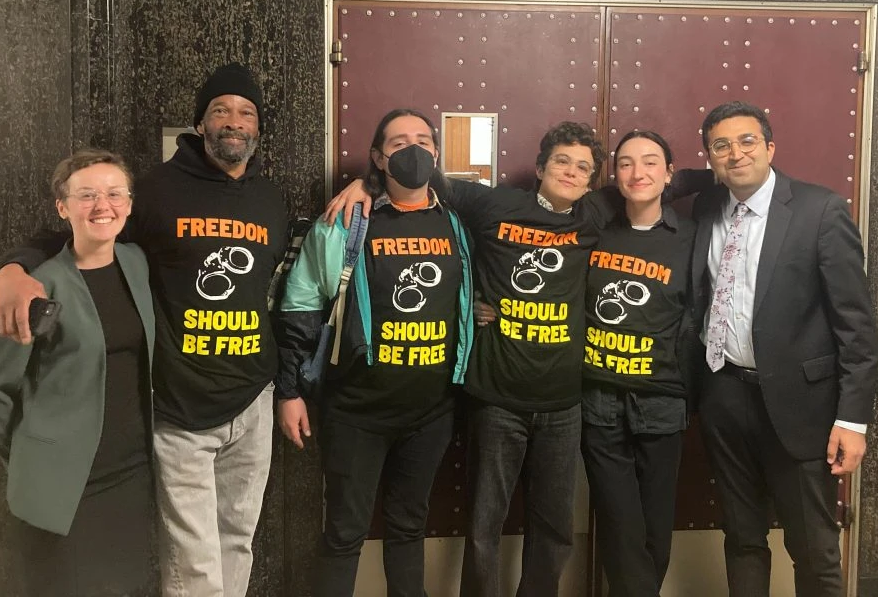
Sandoval v. Riverside. In May 2025, individuals detained in Riverside County jails filed a class action lawsuit challenging Riverside County’s cash-based jailing of individuals between their arrest and first court hearing, as well as Riverside County’s unnecessary delay of that hearing. Rabbi David Lazar and Reverend Jane Quandt chose to join this lawsuit because they view cash-based jailing as unconscionable. The lawsuit was filed against Riverside County Superior Court, Riverside County, the Riverside County Sheriff’s Office, and Sheriff Chad Bianco.
Challenging the Los Angeles Bail Schedule
Urquidi v. City of Los Angeles. CRC and co-counsel brought suit in California Superior Court in November 2022 on behalf of several individuals who had been jailed for five days simply because they could not access enough cash to pay for their freedom.
Striking Down the Money Bail System in Louisiana
Caliste v. Cantrell. In 2017, Civil Rights Corps filed a landmark federal class action lawsuit challenging the unconstitutional money bail system in New Orleans, Louisiana.
Pretrial Detention
On any given day there are around 500,000 people locked up in this country awaiting trial. When we jail people, we trigger cascading consequences. Jobs are lost. Housing and child custody are jeopardized. Individuals, snatched from their homes and families, forfeit the social and community support that matter so much. Detaining someone, even for a few days, can have a severe impact on their physical and mental wellbeing –and can even result in their death.

Challenging the Riverside County Bail Process
Sandoval v. Riverside. In May 2025, individuals detained in Riverside County jails filed a class action lawsuit challenging Riverside County’s cash-based jailing of individuals between their arrest and first court hearing, as well as Riverside County’s unnecessary delay of that hearing. Rabbi David Lazar and Reverend Jane Quandt chose to join this lawsuit because they view cash-based jailing as unconscionable. The lawsuit was filed against Riverside County Superior Court, Riverside County, the Riverside County Sheriff’s Office, and Sheriff Chad Bianco.
Challenging pretrial detention practices in Oregon
In partnership with public defenders in Oregon, Civil Rights Corps is challenging Oregon’s longstanding practices of jailing people charged with misdemeanors prior to trial and jailing people charged with other crimes without constitutionally required due process.
Challenging Pretrial Detention Practices in Maryland
Butler v. Prince George’s County. In 2022, CRC and partners filed a class action lawsuit challenging Prince George’s County’s pretrial detention practices. The lawsuit seeks a declaration that PG County and its officials violate Plaintiffs’ rights under the United States and Maryland Constitutions by detaining people pretrial without meeting the substantive and procedural standards required for pretrial detention.
Fines & Fees
Every day people are put in jail over unpaid debts such as traffic tickets or court fees. We keep people on probation because they cannot pay off their fines. We fine and jail people experiencing homelessness for basic, life-sustaining activities like sleeping and sheltering themselves. We suspend and revoke driver’s licenses for unpaid fees and fines, making it impossible for nearly 7 million people to conduct their daily lives — to work, see the doctor, buy groceries, visit family, pick up and take care of children, and even to leave the house. And we deny voting rights to people who cannot pay criminal-legal debts.
This practice of criminalizing poverty most often affects Black, brown, LGBTQIA+, and low-income communities and turns jails into debtors’ prisons where poor people are put in cages simply for being poor. Criminalizing poverty prevents families from thriving by increasing challenges low-income people already face making economic stability harder to achieve.

Challenging For-Profit Probation Scheme in Giles County
McNeil v. Community Probation Services. In 2018, five named plaintiffs sued Giles County, TN and two private probation companies on behalf of a class of people who were being supervised on for-profit probation.
Challenging For-Profit Probation Scheme in Rutherford County
Rodriguez v. Providence Community Corrections. In 2018, Civil Rights Corps announced a landmark settlement in a first-of-its-kind class action case in federal court against Rutherford County and Providence Community Corrections, Inc., a private probation company that made millions of dollars over more than a decade by exploiting the poorest people in Rutherford County.
Challenging Debtors’ Prison Practices in Ferguson
Fant v. City of Ferguson. In 2015, we filed a landmark challenge to the City of Ferguson’s conversion of its legal system into a mechanism for generating revenue. The lawsuit sought justice for thousands of people who alleged that Ferguson routinely violated their constitutional rights by jailing them in deplorable conditions and without the necessary legal process because they could not pay money to the City.
Bail
Every night, there are hundreds of thousands of people awaiting trial in U.S. jail cells solely because they cannot make a payment. Civil Rights Corps challenges wealth-based detention and promotes anti-carceral alternatives to human caging that are less restrictive, more effective, and grounded in holistic community engagement and empowerment. Our work has freed tens of thousands of people from jail cells, helped to elevate the issue of money bail into the popular consciousness, and is setting precedent that will forever change the bail-setting process in the United States.
Challenging the Riverside County Bail Process
Sandoval v. Riverside. In May 2025, individuals detained in Riverside County jails filed a class action lawsuit challenging Riverside County’s cash-based jailing of individuals between their arrest and first court hearing, as well as Riverside County’s unnecessary delay of that hearing. Rabbi David Lazar and Reverend Jane Quandt chose to join this lawsuit because they view cash-based jailing as unconscionable. The lawsuit was filed against Riverside County Superior Court, Riverside County, the Riverside County Sheriff’s Office, and Sheriff Chad Bianco.
Challenging the Los Angeles Bail Schedule
Urquidi v. City of Los Angeles. CRC and co-counsel brought suit in California Superior Court in November 2022 on behalf of several individuals who had been jailed for five days simply because they could not access enough cash to pay for their freedom.
Striking Down the Money Bail System in Louisiana
Caliste v. Cantrell. In 2017, Civil Rights Corps filed a landmark federal class action lawsuit challenging the unconstitutional money bail system in New Orleans, Louisiana.
Pretrial Detention
On any given day there are around 500,000 people locked up in this country awaiting trial. When we jail people, we trigger cascading consequences. Jobs are lost. Housing and child custody are jeopardized. Individuals, snatched from their homes and families, forfeit the social and community support that matter so much. Detaining someone, even for a few days, can have a severe impact on their physical and mental wellbeing –and can even result in their death.
Challenging the Riverside County Bail Process
Sandoval v. Riverside. In May 2025, individuals detained in Riverside County jails filed a class action lawsuit challenging Riverside County’s cash-based jailing of individuals between their arrest and first court hearing, as well as Riverside County’s unnecessary delay of that hearing. Rabbi David Lazar and Reverend Jane Quandt chose to join this lawsuit because they view cash-based jailing as unconscionable. The lawsuit was filed against Riverside County Superior Court, Riverside County, the Riverside County Sheriff’s Office, and Sheriff Chad Bianco.
Challenging pretrial detention practices in Oregon
In partnership with public defenders in Oregon, Civil Rights Corps is challenging Oregon’s longstanding practices of jailing people charged with misdemeanors prior to trial and jailing people charged with other crimes without constitutionally required due process.
Challenging Pretrial Detention Practices in Maryland
Butler v. Prince George’s County. In 2022, CRC and partners filed a class action lawsuit challenging Prince George’s County’s pretrial detention practices. The lawsuit seeks a declaration that PG County and its officials violate Plaintiffs’ rights under the United States and Maryland Constitutions by detaining people pretrial without meeting the substantive and procedural standards required for pretrial detention.
Fines & Fees
Every day people are put in jail over unpaid debts such as traffic tickets or court fees. We keep people on probation because they cannot pay off their fines. We fine and jail people experiencing homelessness for basic, life-sustaining activities like sleeping and sheltering themselves. We suspend and revoke driver’s licenses for unpaid fees and fines, making it impossible for nearly 7 million people to conduct their daily lives — to work, see the doctor, buy groceries, visit family, pick up and take care of children, and even to leave the house. And we deny voting rights to people who cannot pay criminal-legal debts.
This practice of criminalizing poverty most often affects Black, brown, LGBTQIA+, and low-income communities and turns jails into debtors’ prisons where poor people are put in cages simply for being poor. Criminalizing poverty prevents families from thriving by increasing challenges low-income people already face making economic stability harder to achieve.
Challenging For-Profit Probation Scheme in Giles County
McNeil v. Community Probation Services. In 2018, five named plaintiffs sued Giles County, TN and two private probation companies on behalf of a class of people who were being supervised on for-profit probation.
Challenging For-Profit Probation Scheme in Rutherford County
Rodriguez v. Providence Community Corrections. In 2018, Civil Rights Corps announced a landmark settlement in a first-of-its-kind class action case in federal court against Rutherford County and Providence Community Corrections, Inc., a private probation company that made millions of dollars over more than a decade by exploiting the poorest people in Rutherford County.
Challenging Debtors’ Prison Practices in Ferguson
Fant v. City of Ferguson. In 2015, we filed a landmark challenge to the City of Ferguson’s conversion of its legal system into a mechanism for generating revenue. The lawsuit sought justice for thousands of people who alleged that Ferguson routinely violated their constitutional rights by jailing them in deplorable conditions and without the necessary legal process because they could not pay money to the City.