



Striking Down Unaffordable Money Bail & Pretrial Detention for Lower-Level Crimes in California
In re Kowalczyk
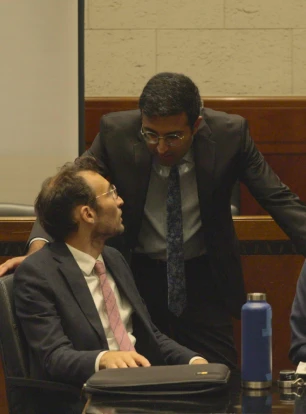
In May 2026, the California Supreme Court issued one of the most liberatory decisions in U.S. history, unanimously holding that jailing a person pretrial simply because they can’t pay money bail is unconstitutional. This holding in In re Gerald Kowalczyk is based on longstanding and fundamental principles found in both the United States and California Constitutions.
The California Supreme Court also held that the vast majority of people accused of crimes must be released prior to trial under the California Constitution and reaffirmed rigorous procedural protections that the government must follow if it seeks to detain a presumed innocent person. Specifically, consistent with article I, section 12 of the California Constitution, courts cannot detain anyone charged with a misdemeanor or anyone charged with a nonviolent or nonsexual felony. This holding will ensure pretrial release and prevent family separation across all lower-level, “nonviolent” felony cases in California. For others in more serious cases, the Court held that it is unconstitutional to impose the “significant” harms of pretrial detention – “the risk of losing one’s job, home, or custody of a child, the possible connection to reoffending, and costs to the taxpayers of incarcerating defendants” unless the government follows strict procedures outlined below.
The California Constitution carefully describes the circumstances where pretrial detention is appropriate – felony offenses involving threats, violence, or sexual assault, where a judge finds there is: 1) strong evidence of likely guilt after a full-blown adversarial hearing; and 2) that release would pose a danger. Posing such a danger sufficient for detention must also mean, the Court made clear in Humphrey, that there are no other less restrictive alternatives that could reasonably mitigate that danger and assure the accused’s return to court.
But, until now, California courts have often locked people up pretrial, even when only charged with misdemeanors or nonviolent offenses, if they could not pay a financial condition of pretrial “release.” For example, Mr. Kowalczyk, who was unhoused, used a credit card he found on the floor to buy a cheeseburger at Five Guys. He was charged with felony identity theft, then jailed on $75,000 money bail. When he challenged his detention under Humphrey, the court responded by detaining him without bail. That was unconstitutional, the Supreme Court held. Courts must decide whether to detain people based on whether they are dangerous and whether their detention complies with the state constitution, not whether they can make a payment. While judges are free to use money bail if they find it necessary to encourage a person to appear in court, it must be affordable, not a means to detain. These strict procedures, affirmed in Kowalczyk, thus closed a loophole in California law that for many years enabled prosecutors and courts to accomplish detention by using unaffordable money bail without complying with the longstanding procedures required for a transparent order of pretrial detention.
Civil Rights Corps developed and pioneered the legal theories in this case and has litigated hundreds of similar cases in California for nearly a decade. CRC also represented Mr. Kowalczyk in the Court of Appeal and then again as a lead amicus in the California Supreme Court.
Media Coverage
Did the California Supreme Court Just Remake the State’s Bail System? | The Marshall Project | May 9, 2026
The reins on cash bail just got tighter in California. How much is up for debate | The Mercury News | May 6, 2026
San Mateo $7 Burger Bust Sparks Statewide Bail Crackdown | Hoodline | May 1, 2026
California Supreme Court Clarifies Limits on Bail, Reaffirms Right to Pretrial Release | Davis Vanguard | Apr 30, 2026
A $7 cheeseburger reopened debate over bail in California. Here’s what the Supreme Court found | CalMatters | Apr 30, 2026
Bail must be ‘reasonably attainable’ for nonviolent offenders, California Supreme Court rules | San Francisco Chronicle | Apr 30, 2026
How a lost credit card and $7 cheeseburger reignited California’s debate over excessive bail | CalMatters | May 29, 2024
Partners:
Filings:
Amicus Brief - Civil Rights Corps & ACLU of Northern California (Nov 8, 2023)
More from the Bail

Since the landmark Humphrey ruling, our California habeas project has expanded: providing training and partnering, so far, with 17 county public defender and appointed defender offices spanning all 6 of California’s intermediate appellate districts and the California Supreme Court.
Sandoval v. Riverside. In May 2025, individuals detained in Riverside County jails filed a class action lawsuit challenging Riverside County’s cash-based jailing of individuals between their arrest and first court hearing, as well as Riverside County’s unnecessary delay of that hearing. Rabbi David Lazar and Reverend Jane Quandt chose to join this lawsuit because they view cash-based jailing as unconscionable. The lawsuit was filed against Riverside County Superior Court, Riverside County, the Riverside County Sheriff’s Office, and Sheriff Chad Bianco.
In partnership with public defenders in Oregon, Civil Rights Corps is challenging Oregon’s longstanding practices of jailing people charged with misdemeanors prior to trial and jailing people charged with other crimes without constitutionally required due process.
Butler v. Prince George's County. In 2022, CRC and partners filed a class action lawsuit challenging Prince George’s County's pretrial detention practices. The lawsuit seeks a declaration that PG County and its officials violate Plaintiffs’ rights under the United States and Maryland Constitutions by detaining people pretrial without meeting the substantive and procedural standards required for pretrial detention.
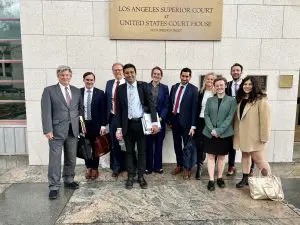
Urquidi v. City of Los Angeles. CRC and co-counsel brought suit in California Superior Court in November 2022 on behalf of several individuals who had been jailed for five days simply because they could not access enough cash to pay for their freedom.
Rodriguez v. Providence Community Corrections. In 2018, Civil Rights Corps announced a landmark settlement in a first-of-its-kind class action case in federal court against Rutherford County and Providence Community Corrections, Inc., a private probation company that made millions of dollars over more than a decade by exploiting the poorest people in Rutherford County.
Walker v. City of Calhoun. In 2015, Civil Rights Corps and the Southern Center for Human Rights filed a crucial lawsuit that alleged that the money bail system in Calhoun, Georgia was unconstitutional.
Edwards v. Cofield. In 2017, Civil Rights Corps and partners filed a putative class-action lawsuit alleging that the money bail system in Randolph County, Alabama, violated the constitutional rights of people charged with misdemeanors or felonies because it created a “two-tiered” system of justice based on wealth.
Robinson v. Martin. Civil Rights Corps filed a historic challenge to the unconstitutional money bail system in Cook County, Illinois. Our 2016 lawsuit alleged that the money bail system that pervaded the Chicago region, in which people are kept in jail cells solely because they cannot make monetary payments, is unconstitutional.