


Challenging the Los Angeles Bail Schedule
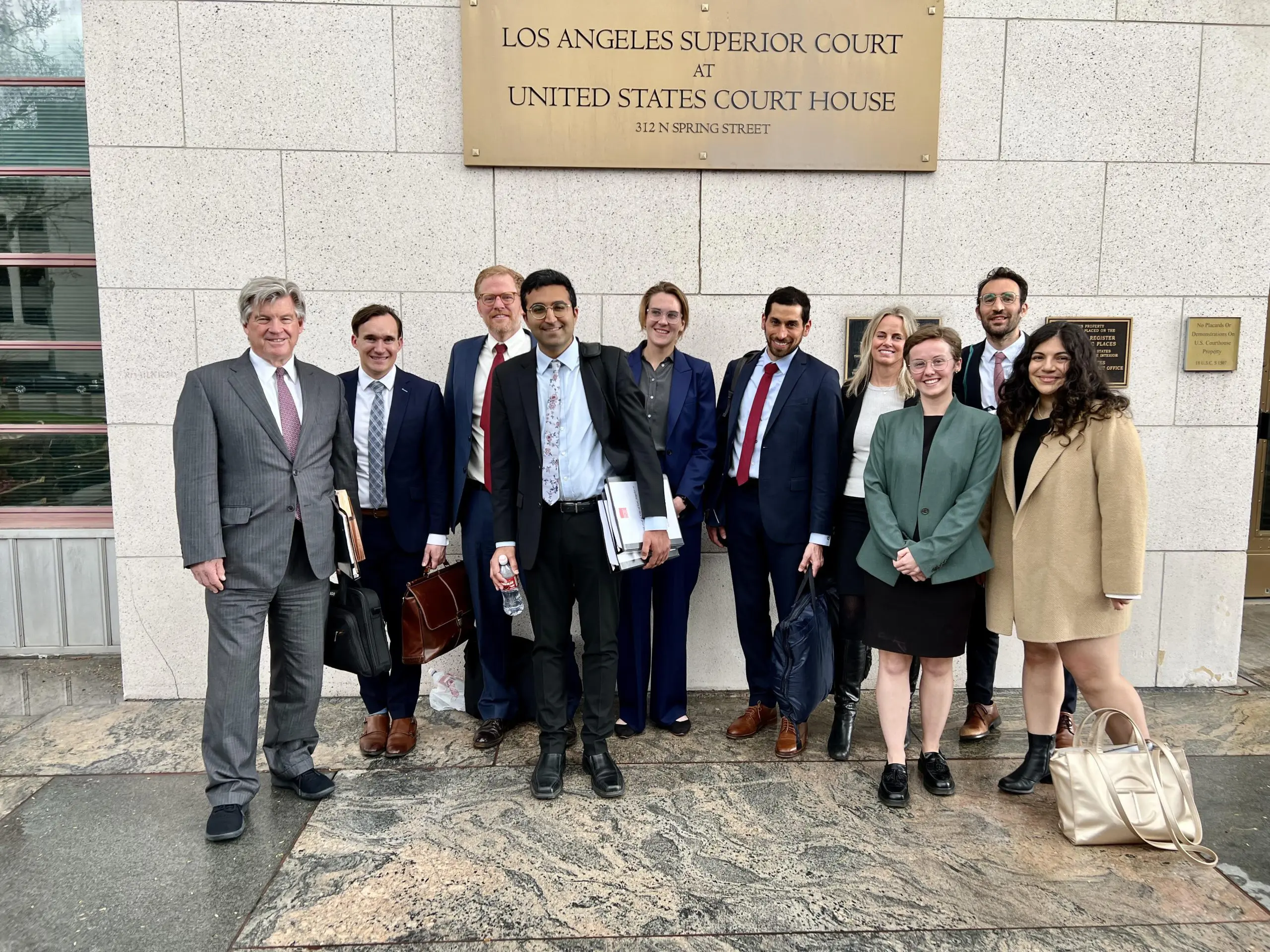
Urquidi et al. v. City of Los Angeles
Before this suit, Los Angeles had long conditioned the liberty of individuals whom police arrest on whether they could pay an arbitrary amount of money listed on a “bail schedule.” For days before people are brought to court or provided an attorney, they languish in unsanitary jails – away from their jobs, families, the mental and physical health care they were receiving in the community, and more – if they cannot pay. Many are released once finally brought to court because prosecutors decline to charge any crime or a judge immediately sees that they are safe to release. While it remains the norm in California, this practice of cash-based post-arrest jailing is patently unconstitutional and profoundly destructive.
Civil Rights Corps and co-counsel brought suit in California Superior Court in November 2022 on behalf of several individuals who had been jailed for five days simply because they could not access enough cash to pay for their freedom. Recognizing the strength of the constitutional case against LA’s money bail policy, a judge issued an emergency TRO releasing the named plaintiff still in custody the day after the suit was filed. Six months later, after a multi-week evidentiary hearing, Judge Lawrence P. Riff issued a historic preliminary injunction, recognizing that not only was LA’s bail schedule unconstitutional, but it was contrary to public safety.
Judge Riff explained that all available evidence shows “secured money bail regimes are associated with increased crime and increased FTAs as compared with unsecured bail or release on non-financial conditions. What’s more, the evidence demonstrates that secured money bail, as now utilized in Los Angeles County, is itself “criminogenic”.— that is, secured money bail causes more crime than would be the case were the money bail schedules no longer enforced.”
Judge Riff’s injunction struck down LA’s cash-based bail schedule and required the post-arrest release of most individuals arrested for misdemeanor or lower-level felonies. In response, the LA Superior Court passed a new bail schedule implementing these principles, which took effect in October 2023. However, because unconstitutional money bail still arbitrarily determines the freedom or detention of those charged in many other case categories, the suit continues.
Civil Rights Corps continues to litigate the Urquidi case while working towards similar reforms elsewhere in California, which are constitutionally required, long overdue, and urgently required to protect California’s most vulnerable communities.
Media Coverage:
Texts and mental health services could replace cash bail in LA | KCRW | May 23, 2023
‘If I could buy freedom, I would’: LA residents who can’t afford bail sue to change system | The Guardian | Nov 14, 2022
Partners:
Munger, Tolls & Olson
Hadsell Stormer Renick & Dai
Filings:
Amended Complaint (Apr 10, 2023)
Order granting Temporary Restraining Order (November 15, 2022)
Ex Parte Application for Temporary Restraining Order and Order to Show Cause Regarding Preliminary Injunction (November 14, 2022)
Declaration of Philip Urquidi (November 14, 2022)
Original Complaint (Nov 14, 2022)
More from the Bail

Sandoval v. Riverside. In May 2025, individuals detained in Riverside County jails filed a class action lawsuit challenging Riverside County’s cash-based jailing of individuals between their arrest and first court hearing, as well as Riverside County’s unnecessary delay of that hearing. Rabbi David Lazar and Reverend Jane Quandt chose to join this lawsuit because they view cash-based jailing as unconscionable. The lawsuit was filed against Riverside County Superior Court, Riverside County, the Riverside County Sheriff’s Office, and Sheriff Chad Bianco.
In partnership with public defenders in Oregon, Civil Rights Corps is challenging Oregon’s longstanding practices of jailing people charged with misdemeanors prior to trial and jailing people charged with other crimes without constitutionally required due process.
Butler v. Prince George's County. In 2022, CRC and partners filed a class action lawsuit challenging Prince George’s County's pretrial detention practices. The lawsuit seeks a declaration that PG County and its officials violate Plaintiffs’ rights under the United States and Maryland Constitutions by detaining people pretrial without meeting the substantive and procedural standards required for pretrial detention.
Graff v. Aberdeen Enterprizes II, Inc. On November 2, 2017, Civil Rights Corps, the Institute for Constitutional Advocacy and Protection at Georgetown Law, and private counsel filed this putative class action in the U.S. District Court for the Northern District of Oklahoma on behalf of individuals facing arrest because of their inability to pay their court fines.
Mays v. Dart. In 2020, when the COVID-19 pandemic hit the U.S., many of us protected ourselves by isolating in our homes. For the millions of people trapped in jails and prisons across the country, this was not an option.
Caliste v. Cantrell. In 2017, Civil Rights Corps filed a landmark federal class action lawsuit challenging the unconstitutional money bail system in New Orleans, Louisiana.
McNeil v. Community Probation Services. In 2018, five named plaintiffs sued Giles County, TN and two private probation companies on behalf of a class of people who were being supervised on for-profit probation.
Guill v. Allen. In November 2019, CRC filed a class-action lawsuit on behalf of three people locked in jail cells in Alamance County, North Carolina only because they are too poor to purchase their freedom.
Rodriguez v. Providence Community Corrections. In 2018, Civil Rights Corps announced a landmark settlement in a first-of-its-kind class action case in federal court against Rutherford County and Providence Community Corrections, Inc., a private probation company that made millions of dollars over more than a decade by exploiting the poorest people in Rutherford County.