

Maryland’s Parent Trap: Baltimore Mother Punished After Using Safe Haven Law Designed to Protect Her
Civil Rights Organizations and Leaders File Amicus Brief Defending Parents’ Right to Access the Safe Haven Law Without Liability
Anne Arundel County, MD – In September 2024, Ms. C, a 23-year-old woman and mother of two older children, gave birth to twins. Newly postpartum, and without adequate support, she felt that she could not give them the life she wanted them to have. She researched her options and found the Maryland Safe Haven Law. The Maryland Department of Human Services (DHS) advertised this law as a way for new parents to ensure their children were protected, and promised immunity from civil and criminal prosecutions. Reassured, Ms. C took her healthy four-day-old twins to the designated safe location, the hospital, and provided all the necessary information, in accordance with the Safe Haven law. Ms. C did everything right and should have been protected — but the state punished her anyway.
Soon after, the Baltimore “child welfare” system — also known as the family policing system –- lodged charges against her. Prosecutors alleged in their petition that Ms. C neglected her babies by relying on the Safe Haven Statute. Ms. C was put through agonizing, protracted hearings, after which the trial court found that she had neglected her babies. This finding is accompanied by lasting punishment for Ms. C, including the threat that the family policing system could more easily remove her children in the future. “The Safe Haven Law was supposedly made to help parents and children. I trusted it and then they penalized me when I tried to use it,” said Ms. C.
Ms. C appealed the finding of neglect, arguing that the plain language of the law prohibited such a finding. She also argued that there was no need for such a finding; the children were safely with their father, and the law provides other options for children in Safe Haven custody. However, in August 2025, the Appellate Court of Maryland denied Ms. C’s appeal and affirmed the trial court’s finding.
“Through its Safe Haven law, Maryland promises mothers in desperate straits the ability to access safe care for their child without fear of legal punishment. By breaking the promise of immunity from civil and criminal liability, Maryland courts have created a no-win situation where parents are punished no matter what they do,” said Alexa Richardson, attorney at Civil Rights Corps. “It’s the perfect parent trap.”
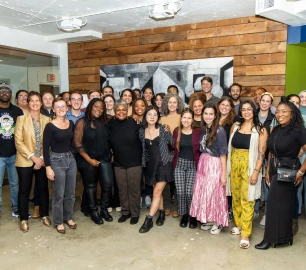
Ms C. is now petitioning the Maryland Supreme Court to review the court’s decision. On October 6th, a group of 19 organizations and movement leaders filed an amicus brief in support of Ms. C’s petition asking the Supreme Court of Maryland to review the Appellate Court’s decision. The brief explains that the lower court’s interpretation of the law will harm infants, parents, and families in Maryland and discourage birthing people from utilizing the Safe Haven program, out of fear that it may result in a Child in Need of Assistance (“CINA”) finding. Physicians and organizations advancing reproductive justice have filed additional amicus briefs in support of the petition.
“The family policing system disproportionally surveils and separates Black families — Maryland is no exception. In recent years, the rate of Black children entering the foster system in Maryland was over two times the rate of white children,” said Miriam Mack, Campaigns And Advocacy Director & Senior Legal Counsel at Movement for Family Power. “By linking Safe Haven laws to this system, the Court will only further isolate already marginalized birthing people and their families.”
“The Appellate Court’s opinion undermines the stated purpose of this law. Fear of a CINA finding will deter parents from using Safe Havens, putting maternal and infant health back at heightened risk—the exact harm the law was meant to prevent,”” said Adina Marx-Arpadi, attorney and Justice Fellow at the Center for Constitutional Rights. “We urge the Maryland Supreme Court to clarify that the Safe Haven law includes immunity from all criminal and civil liability, including a finding of neglect, so that parents are not punished for making a safe choice for their child.”
Amici include the American Civil Liberties Union (“ACLU”), the ACLU of Maryland, Angela Olivia Burton, Black Families Love & Unite, Blessings in Transformation, the Center for Constitutional Rights, CUNY Family Defense Clinic, Civil Rights Corps, Dorothy Roberts, Elephant Circle, JMACforFamilies, Legal Services for Prisoners with Children, Mining for Gold, the MJCF: Coalition, Movement for Family Power, Operation Stop CPS, South East Family Freedom Alliance, UpEND, and The Bronx Defenders.
Learn more about the case and find relevant documents HERE.
###
Civil Rights Corps challenges systemic injustice in the U.S. legal system. Through innovative civil rights litigation, advocacy, and public education, we aim to re-sensitize the legal system and our culture to the injustice and brutality that characterizes the contemporary U.S. legal system. Our work is guided by a commitment to the people and communities harmed by policing, surveillance, incarceration, discrimination, and the criminalization of poverty. Follow CRC on social media: IG: @civrightscorps, Bluesky: civrightscorps.bsky.social, and LinkedIn.
Movement for Family Power is a movement hub and incubator, cultivating and harnessing community power to end family policing and build a world where all families can thrive. We resource and support grassroots organizers and lived experts on the frontlines of dismantling the family policing system through our three-pronged approach: connection, capacity, and care. Follow Movement for Family Power on social media: @movementforfamilypower on Instagram, @movfamilypower.bsky.social on Bluesky, Movement for Family Power on Facebook, and Movement for Family Power on LinkedIn.
The Center for Constitutional Rights works with communities under threat to fight for justice and liberation through litigation, advocacy, and strategic communications. Since 1966, the Center for Constitutional Rights has taken on oppressive systems of power, including structural racism, gender oppression, economic inequity, and governmental overreach. Learn more at ccrjustice.org. Follow the Center for Constitutional Rights on social media: Center for Constitutional Rights on Facebook, @theCCR on Twitter, and ccrjustice on Instagram.