

Defending Children’s Right to Hug Their Parents in Solano County
Etter et al. v. Solano County et al.
Over the last decade, hundreds of jails across the United States have eliminated in-person family visits. The policy change has had devastating consequences for people who are incarcerated, their children and loved ones, and public safety generally. Why has this happened? The answer highlights a profound flaw in how decisions often get made in our legal system: for-profit jail telecom companies know they can earn more profit from paid phone and video calls if jails eliminate free in-person visits for families. So the companies and sheriffs agree to a deal: the jail ends family visits, and the telecommunication company agrees to give the sheriff a cut of the profits. This model arrangement led to a wave across the country, as local jails and companies sought hundreds of millions of dollars in cash from some of the poorest families.
Our lawsuit against Solano County, California asks the state court to recognize that families, whether they are incarcerated or not, have a fundamental right to familial association under the California Constitution, which includes a child’s right to hug their parents.
Contact visit bans can cause irreparable harm to a parent-child relationship.
“Ever since my dad went to jail, I haven’t been able to hug him, touch him, or be in the same room as him. I feel our relationship changing. I notice myself feeling less connected to him. I can tell that I’m distancing myself from him even though I don’t want to [… ]. Some days are extra hard, like my birthday and Father’s Day. On those days, I feel especially sad that the jail won’t let me see him.”
– BaKari Jacoby Etter, 15-year-old plaintiff whose father is detained in Solano County
This is the fourth lawsuit filed as part of the Right 2 Hug Project, a campaign that raises vital constitutional questions, including whether the government can ban children and parents from visiting each other if one of them is jailed even though the policy serves no interest other than making money.
The lawsuit was filed on July 22, 2026, in state court in California against Solano County, the Sheriff’s Office, Sheriff Brad DeWall, and the for-profit, carceral telecom company iWebVisit.
Plaintiffs are asking the court to put an end to Solano County’s cruel family visit ban and permit contact visits for parents and children at all Solano County jails so they can finally hug their loved ones again.
Media Coverage:
Partners:
BraunHagey & Borden LLP
UC Berkeley’s Criminal Law & Justice Center
Filings:
Preliminary Injunction Motion (July 23, 2026)
Declaration of BaKari Etter (July 23, 2026)
Declaration of Deborah Fernandez (July 23, 2026)
Declaration of Kenetra Chappelle (July 23, 2026)
Declaration of Joseph Duran Jr. (July 23, 2026)
Expert Report of Joshua C. Cochran (July 22, 2026)
Expert Report of Julie A. Poehlmann (July 22, 2026)
Expert Report of Vincent N. Schiraldi (July 22, 2026)
More from the Ending Family Separation
OSPD v. Surkin. On June 24, 2026, the Mississippi Office of State Public Defender, its leadership, and private defense counsel Arman Miri, filed a lawsuit in federal District Court against the Mississippi Director of the Administrative Office of Courts (AOC) to ensure they, other Youth Court attorneys, and their clients, can access their own case files after the provision sunsets.
E.L. et al. v. Claps et al. Our lawsuit argues that children whose parents are detained at the Adams County Detention Facility have a fundamental right to familial association under the Colorado Constitution — a right to hug their parents. Parents whose children are detained in Adams County are part of the lawsuit as well.
Amicus Brief: Civil Rights Corps, Movement for Family Power, Center for Constitutional Rights, alongside other civil rights organizations and movement leaders, filed an amicus brief in support of a Baltimore mother whose case involving Maryland's Safe Haven law is being heard by the Maryland Supreme Court. The case is being litigated by the Maryland Office of the Public Defender (OPD).
Civil Rights Corps v. Walker. In November 2024, Civil Right Corps filed a lawsuit asking the federal court to recognize a First Amendment right to observe dependency court in Durham County, North Carolina. For over 15 months, CRC attorneys and staff attempted to observe proceedings in the Durham County dependency courts, which preside over cases involving allegations of abuse and neglect.
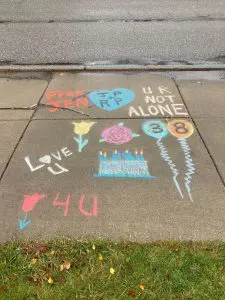
S.L. v. Swanson. In 2024, we filed a lawsuit on behalf of a group of children and parents in Flint, Michigan who were unable to visit jailed family members because of the decision to end in-person visits at the jail.
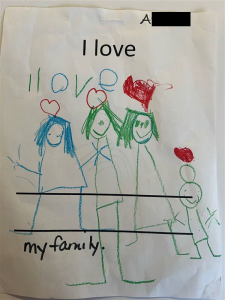
M.M. v. King. In 2024, we filed a lawsuit on behalf of a group of children and parents in Port Huron, Michigan who were unable to visit jailed family members because of the decision to end in-person visits at the jail.